
Apr
Tips For Mowing Your California and Arizona Sod
Maintaining a lush, green lawn in the arid climates of Southern California and Arizona can be quite a challenge. It’s totally achievable though, with the right approach. Mowing plays a pivotal role in keeping your lawn healthy and attractive. Here are some tips on the best way to keep your lawn beautiful when mowing:
1. Choose the Right Mower: It is crucial to select the appropriate mower to achieve optimal results. For Southern California and Arizona, where lawns often consist of warm-season grasses like bermudagrass, Zoysia grass, or St. Augustine grass, consider using a rotary mower. These mowers are well-suited for cutting thicker grass types commonly found in warmer climates.
2. Adjust Mowing Height: Maintaining the correct mowing height is vital for the health of your lawn. In hot and dry climates, it’s recommended to keep your grass slightly taller to provide shade to the soil and retain moisture. Adjust your mower’s cutting height to leave the grass blades around 2 to 3 inches tall. Taller grass also helps to inhibit weed growth by shading the soil.
3. Follow the One-Third Rule: Adhere to the one-third rule that states
you should never remove more than one-third of the grass blade’s height in a single mowing session. Cutting more than this can stress the grass and make it more susceptible to drought and diseases. Aim to mow your lawn regularly to maintain a consistent height.
4. Mow When the Grass is Dry: Mowing wet grass can lead to an uneven cut and cause clumping, which can smother the grass beneath. Additionally, wet grass is more prone to tearing, resulting in an unhealthy appearance. Therefore, it’s best to mow your lawn when the grass is dry, preferably in the morning or late afternoon when temperatures are cooler.
5. Sharpen Mower Blades Regularly: Sharp mower blades ensure clean cuts, promoting healthier grass growth. Dull blades tear the grass instead of cutting it cleanly, leaving ragged edges that are more susceptible to disease. Check your mower blades regularly and sharpen or replace them as needed to maintain optimal cutting performance.
Alternate Mowing Patterns: Changing your mowing pattern regularly helps prevent soil compaction and encourages upright grass growth. Consider mowing in different directions each time you mow to avoid creating ruts and uneven wear on your lawn.
6. Leave Grass Clippings on the Lawn: Grass clippings are a valuable source of nutrients for your lawn. Instead of bagging them, leave them on the lawn to decompose. This practice, known as grasscycling, returns essential nutrients like nitrogen back into the soil, promoting healthy grass growth. For more information, visit westcoastturf.com
No Comment
Dec
Synthetic Turf – Drought Fix or Health and Environmental Hazard?
California is no stranger to drought, it’s a recurring feature of our climate, especially in desert areas. Arizona has been in some stage of drought since 1994(!), so drought is a long-term concept in the West. Many shifts are made for the purpose of water conservation, one of which is in landscaping. With these dry times saw a large uptick in fake lawns.
In a recent controversial move, California Governor Gavin Newsom vetoed a bill aimed at restricting the use of “forever chemicals” in synthetic lawns. The veto highlights the state’s complex stance on artificial turf, as it was a material once promoted as a water-saving solution during droughts. The vetoed bill was part of a broader effort to address health concerns associated with synthetic turf, particularly the presence of perfluoroalkyl and polyfluoroalkyl substances (PFAS). These chemicals, found in the crumb rubber base of artificial turf, have been linked to various chronic diseases. Despite growing worries about the environmental impact and health risks, manufacturers claim they are working to address concerns by exploring alternative materials. However, removing PFAS entirely has proven challenging.
The debate over synthetic turf in California reflects a shift in legislative priorities, with some cities already moving to ban artificial lawns due to environmental concerns. Researchers emphasize the potential health risks associated with PFAS, which can enter the human body through various pathways, including skin contact, inhalation, and water contamination.
Studies indicate that high temperatures can cause chemicals to leach out of the crumb rubber base, posing additional risks to human health. Synthetic turf, known for its heat-retaining properties, can reach temperatures significantly higher than living grass, making it a cause for concern. Experts suggest that real grass and plants offer a more sustainable and environmentally friendly alternative to synthetic grass. Drought-friendly landscaping options, such as warm-season grasses and native plants, provide cooling benefits and contribute to a healthier urban ecosystem.
Comments Off on Synthetic Turf – Drought Fix or Health and Environmental Hazard?Nov
West Coast Turf Wishes The Rose Bowl Stadium a Happy 100th Birthday
Friday, October 28, 2022 was the Official 100th Birthday of the Rose Bowl Stadium in Pasadena. At West Coast Turf, we are proud to provide them with their sod and we join them in celebrating one hundred years of being one of the most famous and beloved venues in sporting history.
Some fast facts: The Rose Bowl has a seating capacity of 92,542, making it the 16th largest stadium in the world, and the 11th largest in the United States. Best known as a football stadium, it’s been home to the UCLA Bruins football team since 1982 and has hosted 5 Super Bowl games (3rd most of any stadium). It’s also a notable soccer venue, as well as a concert venue for many of the most iconic and famous musicians – Michael Jackson, Pink Floyd, The Rolling Stones, U2, and Journey all played there, as well as Lilith Fair festival.
The Rose Bowl was designated a National Historic Landmark and a California Historic Civil Engineering landmark in 1922. Since 1993, West Coast Turf has been the proud providers of their turf that so many sports and teams have played on. We know that the grass you play on is one important aspect of what makes a stadium so popular, and we are honored to provide their Bermuda sod for them year after year.
To see our full client list, click on the About Us section.
Comments Off on West Coast Turf Wishes The Rose Bowl Stadium a Happy 100th BirthdayMay
New Turf Course Debuts at Churchill Downs – BloodHorse
Churchill Downs kicked off its opening night on April 30 for a season of horse racing. Not just any horse racing – turf racing. This newly revamped track has a $10 million lawn debuted and was a huge improvement from the old turf, which many say was not holding up well. The old mix was four-inch high Kentucky 31 Fescue (90%) and Bluegrass (10%) grown in a three-inch topsoil layer over 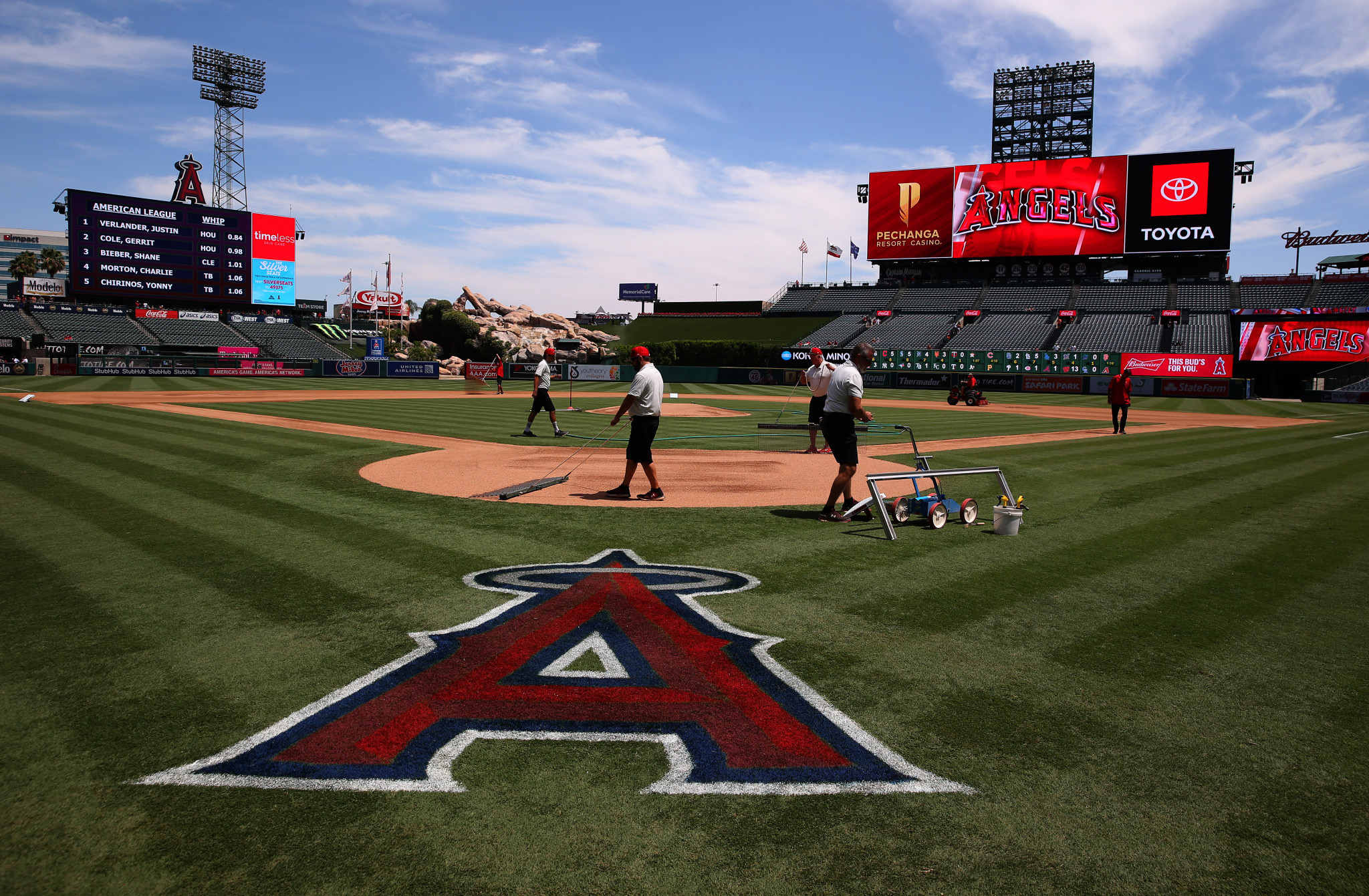 a 13-inch course masonry sand base. The new turf course is Tahoma 31 Bermudagrass overseeded with ryegrass. Tahoma 31 is a variety we have at West Coast Turf and is the most water-saving of all the varieties we use. Currently, we have Tahoma at Dodger Stadium, Angel Stadium, and Dignity Health Sports Park (home of the L.A. Galaxy soccer club).
A little trivia: John Foster had the #2 horse in the Kentucky Derby at Churchill Downs on the dirt surface last year, Hot Rod Charlie, and just got a horse named Tahoma! This Saturday, the country’s most elite racehorses will make their “run for the roses” during the Kentucky Derby.
Why is the Tahoma 31 such a huge improvement on the turf course? Award-winning jockey, Julien Leparoux, says, “For some reason in the spring, the turf course was actually good and by the time we come back in September it was… the opposite of this (new) turf course now. It felt like, even if we didn’t have any rain, it felt we had like 10 inches of rain the day before the races. It was crazy. The horses were going down pretty deep. A lot of kickback. So, I’m glad they fixed it.”
Said jockey Declan Cannon, “With the old course the roots system was dead and there was no growth. And basically, it needed redoing. It had run its course. It just really needed to be replaced.” Churchill jockey Corey Lanerie concurred, “I’m happy to see them invest money in it and redo it because the other one was getting pretty chewed up, and it wasn’t holding together. So, it’ll be safer for the horses and the jockeys.”
In addition to the new mix of grass, they have improved drainage, and the removal of a crown on the outer part of the old course. The crown was there for drainage, but effectively eliminated that part of the course for running. Providing this new turf for the efficiency, and especially safety, of the jockeys and horses is crucial. For more information, visit our website at: https://www.westcoastturf.com/
Comments Off on New Turf Course Debuts at Churchill Downs – BloodHorseMar
When Should I Start to Spring Transition My Lawn to Bermudagrass?
I’d like to go over some common questions I have received through the blog in the last few weeks and see if it can help others with some of the same concerns. I always encourage everyone to send over your lawn questions and I will get back to you as soon as I can.
When should I start to transition my lawn back to bermudagrass?
I always recommend starting the process slowly in March and ramping up in April so your lawn has transitioned by May. I know that was a mouth full, but the truth is it’s not a short process unless you chemically transition your lawn. In March its ideal to start to gradually lower your mowing height and remove some of the turf canopy. This is not a scalp, this is lowering the height so the bermudagrass can breathe and get some sunlight. By mid-March you should be mowing two times per week and starting to see some thinning in the ryegrass. By thinning I mean bermudagrass leaves are starting to show between the ryegrass blades. Currently there is no need to fertilize the ryegrass, its time to back off on nutrition until bermudagrass season. In early April you can lightly verticut or even lightly power rake the lawn to remove some of the ryegrass giving way to bermudagrass. The more sunlight you can get in the grass, the faster you will transition. If the ryegrass remains extremely thick and lush you can expect it to provide excessive spring shade slowing down the bermudagrass. When soil temperatures reach 64 degrees (around April 15th) go ahead and apply ammonium sulfate 21-0-0 at 5 pounds per 1000 SF to jump start your bermudagrass. Continue mowing two times per week and gradually lowering your heights until you see the bermudagrass take over.
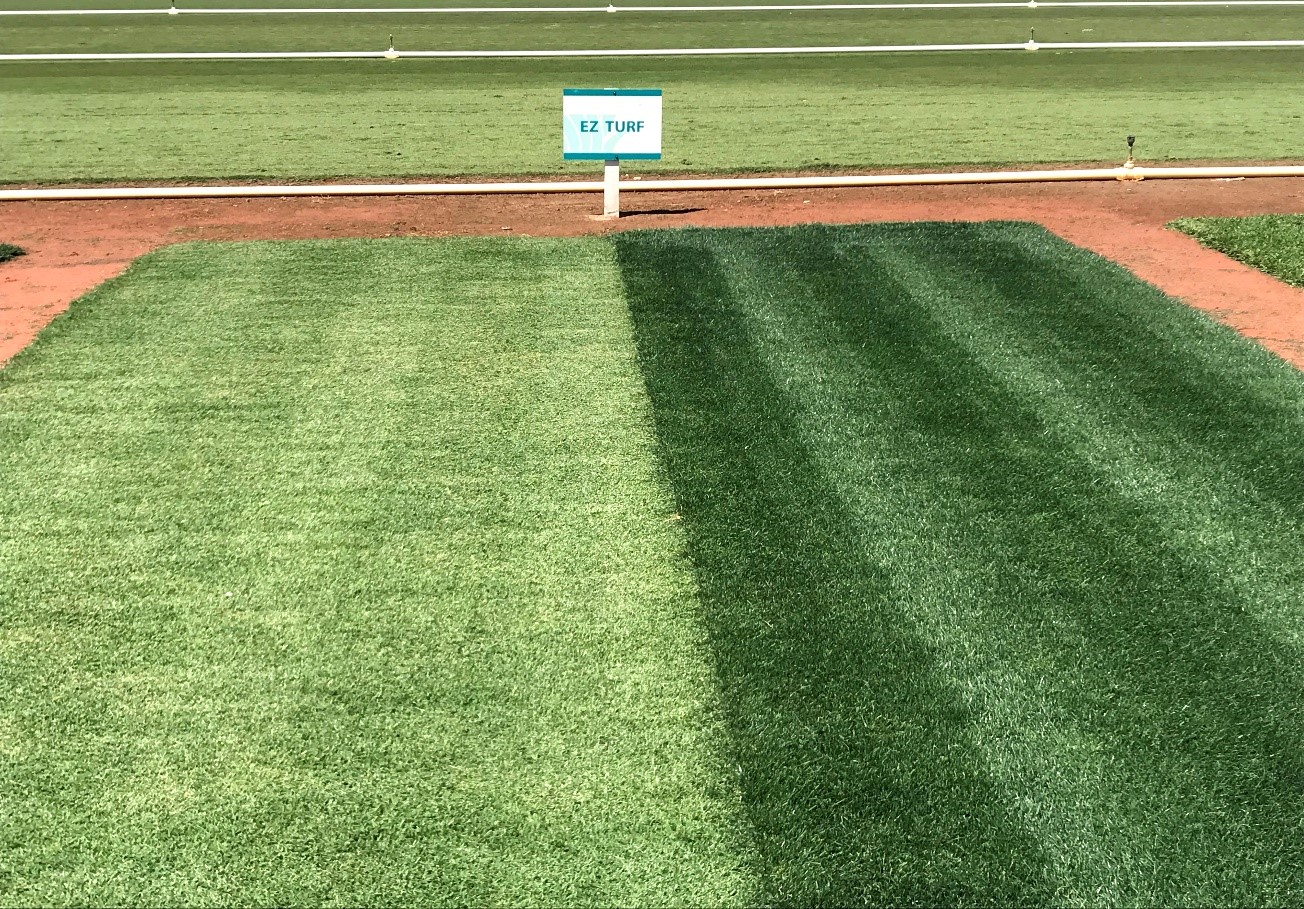
Spring Transition, keep lowering the height…..
Can I still put down pre-emergent for broadleaves?
Most of the grassy weeds and broadleaves are now germinating so putting down the preemergent will not yield the results you’re looking for. At this juncture its best to spot spray weeds depending on the type. Make sure the product is labeled for the weed you’re trying to control and can safely be used on bermudagrass. Grassy weeds use different chemicals than broadleaves and not all chemicals are safe and effective so check with specialty stores for better products.
What can I do to repair the urine damage from my dogs? Read the rest of this entry »
Comments Off on When Should I Start to Spring Transition My Lawn to Bermudagrass?Sep
Questions About Fall Overseeding? Check Out This Video Guide From Mr. Wise Grass!
Yes. It is about that time! If you have warm season grass, you are most likely considering overseeding your lawn. Check out this educational video including Q & A from Jay Danek–Mr. Wise Grass himself. After this video you will know exactly what you need to have the best winter lawn in the neighborhood!

Aug
Hot Weather Lawn Care for your California & Arizona Sod
There’s nothing quite like the cool, lush feel of green grass under your feet. As summer wears on, sometimes that green grass turns to a crunchy brown when not maintained properly. You can keep your beautiful green natural grass thriving even in hot climates if you follow these simple tips.
Mowing is an important part of maintaining your natural turf in desert climates of Southern California and Arizona. It’s best to mow either in the early morning or in the evening to avoid the peak of daytime heat. Set your mower at 3 inches or on the highest setting. When blades are taller, grass is much better able to handle the daytime heat. To this end, mow only a third of the lawn’s total height. Make sure your mower blades are sharp!
In addition to this, if you’re watering your sod correctly, you shouldn’t see any signs of heat stress in your lawn. Although it seems intuitive to water at night, this actually creates an unhealthy situation for your grass with water staying on the blades all night. Instead, water right before sunrise to reduce evaporation.
How can you tell if your natural sod is becoming dry? Look for curled leaf blades. Another sign is change in color. Anyone can tell by their brown grass that it is dry, but even if it becomes a lighter shade of green, it’s time to make sure it’s being properly watered. Most lawns need 1” of water in cooler temps, so for hot weather, it’s suggested that the grass may need 2” of water a week, making sure you water deeply twice a week so the moisture can penetrate into the roots.
West Coast Turf is the leading expert on Arizona sod and California sod and can help you with any questions you may have about installing and maintaining your natural turf lawn.
Visit us at https://www.westcoastturf.com
Comments Off on Hot Weather Lawn Care for your California & Arizona SodFeb
Pre-Emergent Weed Control/Watering/Fertilizer
We are spending lots of time outside, and I know you all want to have your California and Arizona lawn looking its best! I’d like to talk about a few weeds that may be starting to appear in your lawn that are perennial problems. Let’s discuss getting down a pre-emergent herbicide on your lawn before all the spring and summer annuals start to show their faces. Weather obviously plays a key role in everything we do concerning turfgrass so it is important to get the timing right.
This has been a mild winter with little rain causing the ground temperature to stay slightly warmer than normal so we will have some early season weed issues. If you are in a cooler part of town and are still getting hit with the occasional frosts I would hold off until the first part of March. These cool areas can get the pre-emergent down as late as the middle of March, while areas such as Phoenix and Palm Desert should be putting one down between now and the end of the month.
Since most homeowners have an overseeded lawn for the winter I want to make it clear that there are two options on a herbicide bag. One is overseeded rates and the other is non-overseeded rates. If you would like to keep your ryegrass make sure that you follow the overseeded rate or it could take a turn for the worse rather quickly. Read the rest of this entry »
Comments Off on Pre-Emergent Weed Control/Watering/FertilizerOct
Frequently Asked Questions About Overseeding Your Warm Season Lawn
Now that we’re into October it’s time to get the overseeding of your warm season grass process started. I wanted to pass along some of the most frequently asked questions during this time of the year.
When is the best time to start overseeding?
Ideally overseeding should be done when nighttime temperatures are consistently in the 60’s. Usually this will be in October. There will be some higher and lower than normal temperatures, but anytime during October is good.
How low do I need to scalp the grass prior to seeding?
Height of cut isn’t as important as opening the turf canopy. The shorter you mow the grass, the tighter the turf canopy will be which will result in the need to verticut more aggressively. I recommend not going lower than ½”. There is no need to take the lawn to the dirt or you will cause long term problems to the grass plant.
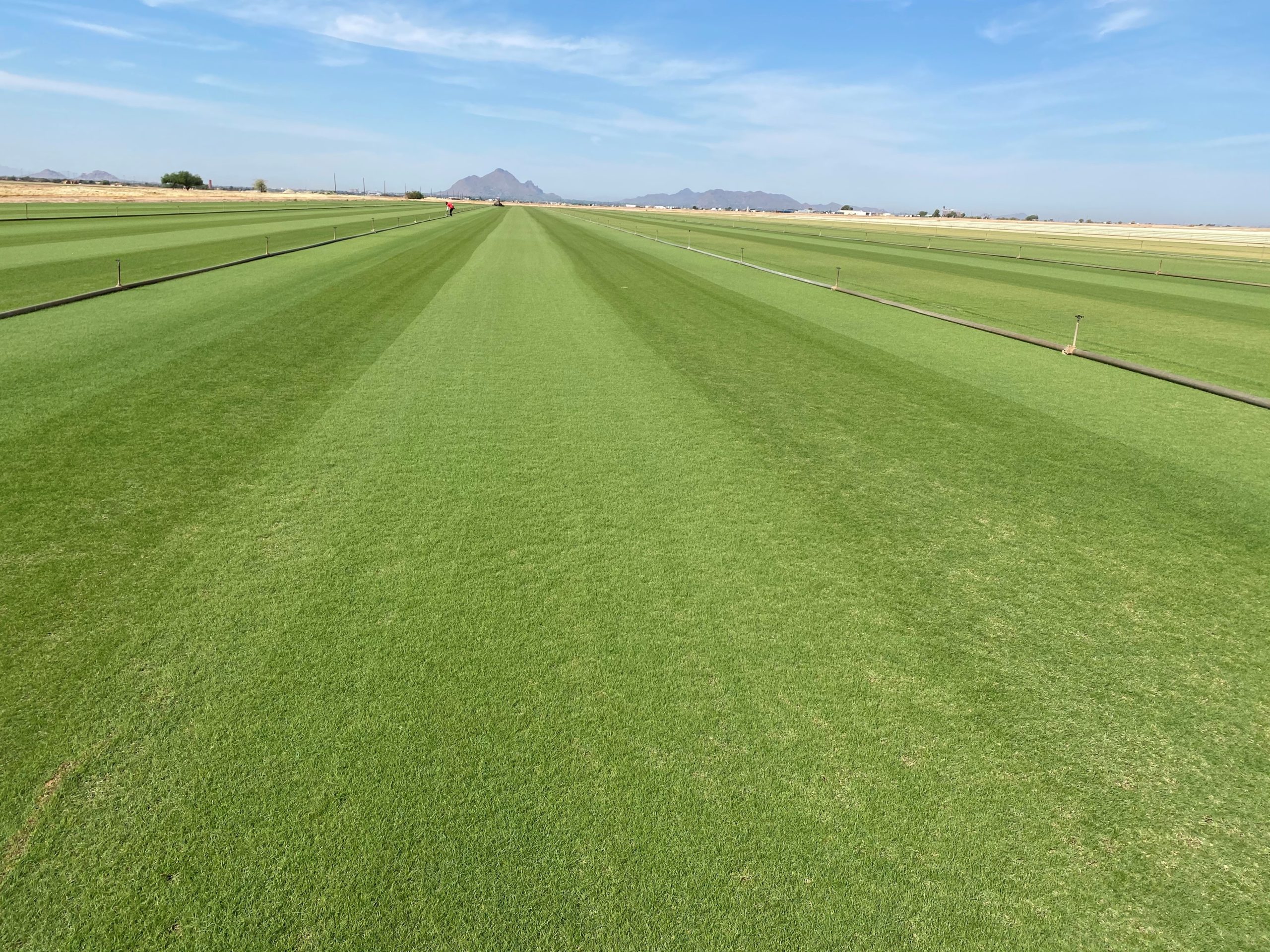
This overseeded bermuda sod field in Scottsdale, Arizona, is READY!
Aug
Attention Landscape Architects! We Are Now Offering ZOOM Educational Opportunities!
These are trying times, but that doesn’t mean we have to stop learning. West Coast Turf is now offering virtual Zoom educational opportunities for landscape architects!
Include your whole office! Find out about the newest varieties including the exciting Kurapia sod natural turfgrass alternative ground cover. It’s drought tolerant, unique, versatile, and beautiful. There are some great new native grasses that look spectacular. We also can update you on our old standbys such as West Coaster Fescue, Santa Ana, Bandera Bermuda, and Tifgreen that are tried and true.
Call or e-mail us today to schedule your presentation–760/340-7301 or danielle@westcoastturf.com. The presentation takes about an hour, and we are able to answer any questions you might have on natural turfgrass varieties or Kurapia sod ground cover for your next project.
We miss you and are excited to “see” you again virtually! Contact us today!