
Oct
Sod Watering Tips for a Healthy Lawn

It goes without saying that maintaining a lush lawn requires regular care. However, there is a prevalent misconception about just how much water your grass needs to remain healthy and green. You may be surprised to find that your lawn requires less water than you might think. Watering requirements for newly planted sod are very different than more established sod watering. To ensure the healthiest lawn, follow a sod watering schedule determined by your location, season and time since sod installation.
Comments Off on Sod Watering Tips for a Healthy LawnAug
Preparing Your Lawn for Fall Transition
We’re halfway through August and the temperatures are still soaring well into the hundreds. As I sit here ordering my ryegrass seed for the farms I figured it was a good time to put out a short blog on preparing your lawn for the fall.
The hot/humid weather is ideal for warm season grasses, especially with sod in Arizona and California. If you had any weak areas in your lawn you saw one of two things happen over the last couple weeks. You either saw the weak areas begin to grow in size or you saw your problem areas fill in as the stolons moved across the open ground.
If your weak areas are getting larger you should take a close look at your irrigation system. Sometimes it appears sprinklers are getting great coverage but when you put out bowls to check for water volume you often find that area is being missed. One of the most common areas for this is right in front of your pop up sprinklers. That triangular spot right below the sprinkler is the hardest spot to cover on the whole lawn. The easiest way to fix this issue is to put in a dual spray nozzle. These cost around $3-$4 and can be installed in under a minute. Read the rest of this entry »
Comments Off on Preparing Your Lawn for Fall TransitionJan
El Nino, Drought, and Your Lawn
We have been hearing about El Nino for some time now and it’s finally upon us. To most of us it spells relief that the drought may finally come to an end. We have been battling one of the worst droughts in history the last few years, and snow and rain will allow many to breathe a sigh of relief. By no means are we out of the woods yet as a few days of snow and rain won’t take care of the problem. It appears the weather models will be correct for this spring. It’s going to be wet spring which will bring back a lot of landscape areas that were put into seasonal dormancy to save water.
As I drove into work this morning I saw two common areas that had their sprinklers running while it was raining. It has been raining for the last four days and it doesn’t appear to be letting up until the weekend. While none of us want to interfere, it is important to let your homeowners association or city know that water is still running in these areas. There is only so much water we can save at our residences, but there are others areas we can step in. Most parks have the irrigation clocks set to run daily, and there is not enough man power to check the areas daily or even weekly. One way to fix this problem is the addition of rain sensors or gauges that attach to the irrigation clock to shut off the sprinklers. I know we can’t go back and fix all the parks that were put in past years, but we can make sure that all new areas are doing everything they can to save water. The majority of people are extremely responsible users of water and we need to encourage others to also use water wisely. Read the rest of this entry »
Comments Off on El Nino, Drought, and Your LawnNov
Tips On Maintaining Your Non-Overseeded Lawn This Winter
As we move through the fall season many of you will choose the option to forgo overseeding this season to save some water. With the prime growing season behind us you’re going to start to see your lawn start to slow down. The days are becoming shorter and your warm season grass is starting to need less inputs. There are a couple areas where you can cut back this winter to save yourself money. I will go into detail what you need to maintain a non-overseeded lawn during the winter, and go briefly over an overseeded lawn watering and fertilizer schedule.
My first suggestion for those that will not be overseeding is to turn your irrigation clock off except on the day you will be watering. Having your lawn set up to automatically run certain days and times during the fall/winter will cause you to use much more water than your lawn can utilize.
Comments Off on Tips On Maintaining Your Non-Overseeded Lawn This Winter
Aug
The Drought and Your Grass. How to Have a Lawn and Benefit the Environment.
Let’s face it–there is little one can do to escape the oppressive August heat in Arizona and California. But, did you know your property with grass is a good 30 degrees cooler than your neighbors’ with rocks, and 50 degrees cooler than the ones with artificial turf? Natural turfgrass has some major benefits!
I thought I would start off today’s blog by giving you some light at the end of the dark tunnel we call “summer.” While we started the summer off with mild temperatures, they have quickly soared making it one of the hottest summers on record. In order to combat the temperatures most people try to stay inside or crank up their air conditioners, but what we should be doing is looking for ways to control the ambient temperature at our properties. Installing grass is one of the best ways for lowering the temperature around your house, and allowing you to stay cool when you’re out enjoying a beverage by the pool.
I know a lot of people are reading that first paragraph and saying we’re experiencing a historic drought–how can we put in a new lawn? Yes, we are experiencing a drought, but the media would have you believe all the water being used is by lawns and golf courses. How about hotels, pools, washing cars, long showers, fountains, air conditioners, increase in electricity usage, washing dishes, and on and on? It’s easy to blame turfgrass for using too much water, but we need to look ourselves in the mirror each day and realize all need to act responsibly during this drought. Some see grass as a luxury, and golf as a silly game that is using our water supply. What they don’t see are the positive effects turfgrass has on the environment.
Comments Off on The Drought and Your Grass. How to Have a Lawn and Benefit the Environment.
Jun
“Don’t Gravelscape L.A.”
We came across this article that ran in the Los Angeles Times last weekend called Don’t Gravelscape L.A.
They make some GREAT points! Before you consider ripping out your lawn, please read this article and we bet you will change your mind! We are in a drought, and we need to be water savvy. But you can still have a lawn! Really!
People are starting to panic about their lawns. The Metropolitan Water District is adding $350 million to its lawn removal rebate program and homeowners are scrambling to rip out grass and replace it with something easy and oh-so drought tolerant — gravel or artificial turf. At least one lawn removal contractor promises to do it for free (the company cashes in the rebate).
Drought panic and rebates incentivize too many quick and dirty solutions for our water crisis. All over the city — and especially in park-poor areas, where postage-stamp lawns may be the only relief from pavement — we have to think before we act. Will exchanging a living, breathing yard for a bleak gravelscape save water? Some. But is it the only way? Is it the right way?
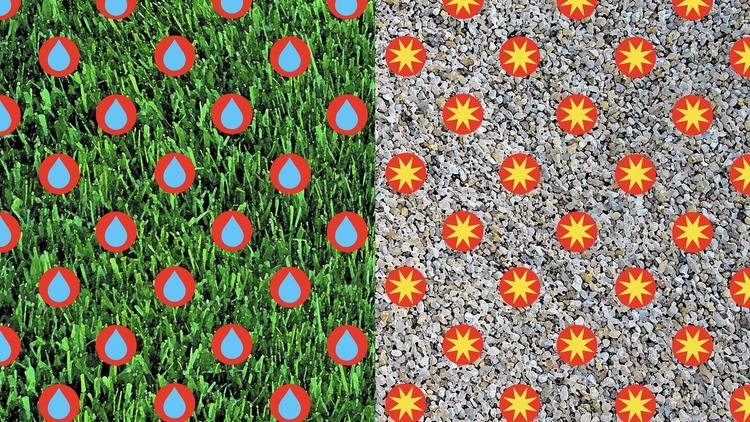
Before you call the gravel truck, here are a few things to consider.
Read the rest of this entry »
Jun
Spring/Summer Transition and Your Lawn
We all know that transitioning from ryegrass back to a warm season grass is difficult (especially for California and Arizona sod), but throw in some cooler than normal weather and now you have a battle. Every year the producers of ryegrass seed seem to make their seed a little more heat resistant in search of that year round turf. The problem with this is that we’re shortening the growing window of our warm season turf. Not to mention that cool season grasses in the desert areas use much more water than the underlying warm season turf. The solution is to aide your lawn in transition, and to get your lawn free and clear of ryegrass in the next couple weeks.
Before I go into techniques to remove ryegrass I want to make a couple points about how the average lawn looks at this time of the year. We all love our winter lawn for its color, texture, and feel, but it’s important to remember that it puts agronomic stress on your lawn. When you have two different grasses competing for nutrients, water, and sunlight you’re bound to have an “ugly period.” The turf world refers to this as the transition period. This is the period of time when the cool season grass is starting to die off slowly and the warm season grass is trying to emerge. What creates the ugly period is the competition.

(BTW…this beautiful turfgrass is NOT going through an ugly stage!)
May
Water Restrictions and Your Lawn. What Now? PART-2
So here we are, May of 2015, and for the first time in many of our lives we are being asked to cut our water usage by at least 25%. As I alluded to in PART-1 of using water wisely (please click here to read PART-1 if you have not already) many people view water consumption solely as an agricultural problem. It is easy to look at the percentages of water used by the agricultural industry and blame them for the water shortage, but have you considered that the real problem lies within us.
Did you know that over the past ten years the agriculture industry has lowered their water use rate from as much as 90% to less than 69% of total water consumed? Again many of you will look at the percentage of water used and say it is still too high, but the homeowner use rate has skyrocketed, while agriculture has learned to adapt and change.
Did you know the average family of four wastes 10,000 gallons of water a year waiting for hot water to arrive to their shower? Right there you can save 6% of your yearly water use. I know we’re supposed to be talking about landscape water rates, but more needs to be addressed than simply blaming one industry. I will be the first to tell you landscape water use rates need to go down. The average household wastes 16,000 gallons of water per year overwatering their landscapes. This is an additional 9% of your yearly water total being wasted. Today I will be giving you directions on how to not only save the 9% of overwatering, but I will also give you ways to save another 10% by watering smarter and using proper agronomic practices. I would be remised if I didn’t say this before I begin. Grass doesn’t waste water, people do. Read the rest of this entry »
Comments Off on Water Restrictions and Your Lawn. What Now? PART-2Apr
Water Restrictions and Your Lawn. What Now? PART-1
With the new water restrictions in California, I think now is a great time to revisit the proper way to irrigate your lawn. We have some say they will be taking out their lawns due to the water restrictions, but before you do so I think it is important to take everything into consideration.
We often see every issue in society as black and white, but there is always a grey area. We all take our own individual sides of an issue, but we need to take the time to find a middle ground. Just as is the case in the political spectrum one answer isn’t always correct. Two sides need to work together to come up with a way of solving our problems. Over the next week I will be writing a two part series on how to conserve water and have a great lawn at the same time. Read the rest of this entry »
Comments Off on Water Restrictions and Your Lawn. What Now? PART-1Feb
WEEDS! Pre-Emergent Herbicides and Your Lawn
Last week it was raining and in the low 60’s and this week we will be pushing the low 80’s. Everyone knows that the rain is great for our lawns but it is also great for producing weeds.
As we move through February it is important to think about your lawn from the previous year. Did you have weed issues? Were you constantly pulling spurge out of the lawn during the summer? Even if you didn’t have a bad case of this last year you should still think about putting down a pre-emergent herbicide. The window to apply these is from now until the end of February. If you miss the window and the seedlings have already germinated you can bet you will be on your hands and knees this summer pulling weeds out of your turf.
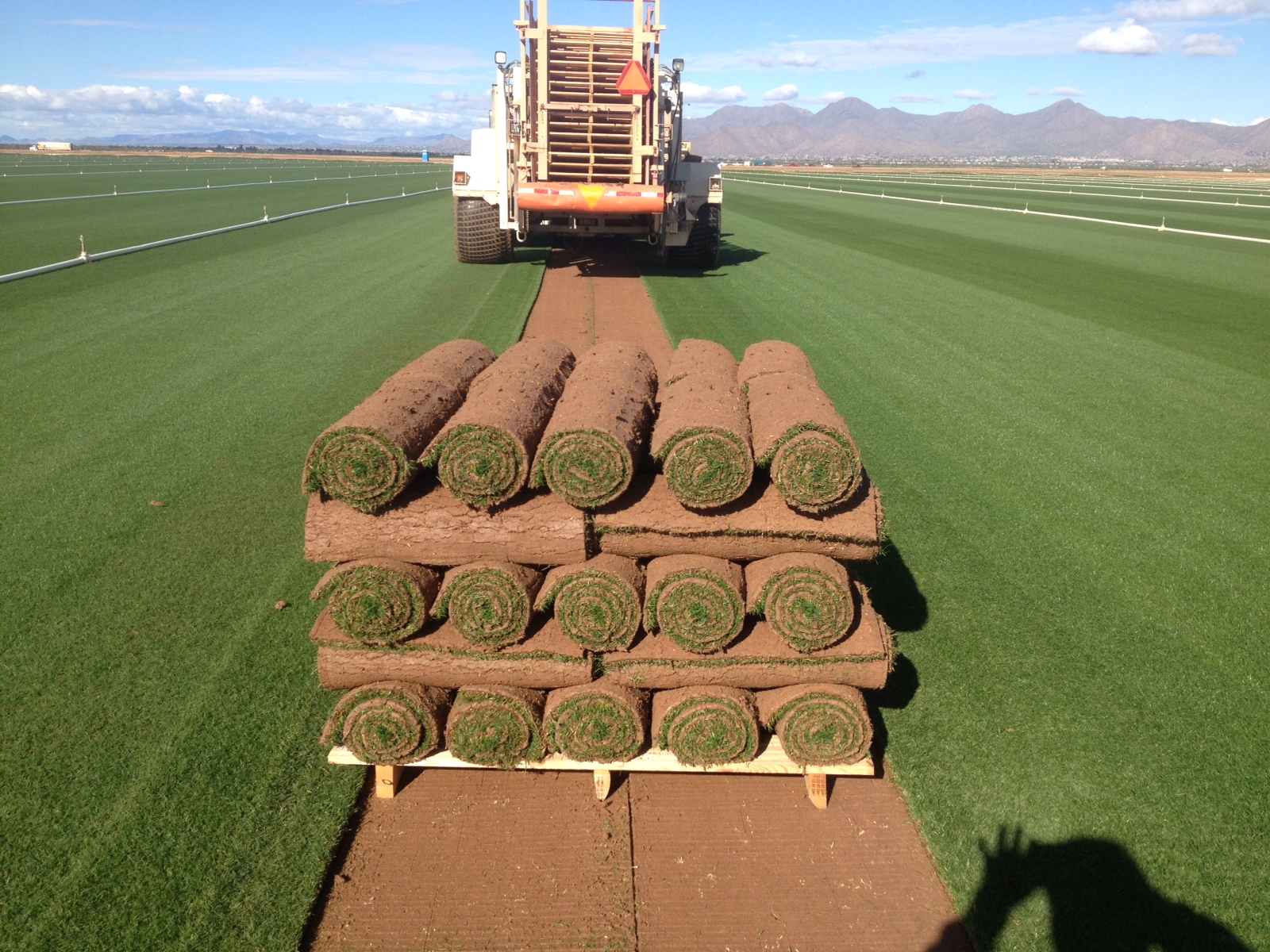
AutoStack Sod Harvester
Comments Off on WEEDS! Pre-Emergent Herbicides and Your Lawn


